

In highly corrosive environments such as chlor-alkali plants,electroplating,hydrometallurgy, and new energy electrolysis, materials often face a dilemma: pure copper conducts well but is not corrosion-resistant, while pure titanium is corrosion-resistant but has poor conductivity and is expensive.
I. What is Titanium-Clad Copper?
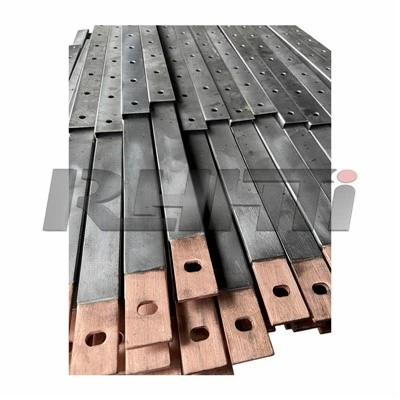
Titanium-clad copper is a bimetallic composite material with copper as the core and titanium as the shell, commonly found in rods, plates, and profiles.
- Inner Copper Layer: Responsible for high conductivity and low loss
- Outer Titanium Layer: Responsible for acid and alkali resistance, salt spray resistance, and corrosion resistance
- Interfacial Metallurgical Bonding: No delamination, no leakage, long lifespan
In short: Using the conductivity of copper and the armor of titanium, achieving 1+1>2.
Four Core Advantages, Outperforming Traditional Materials
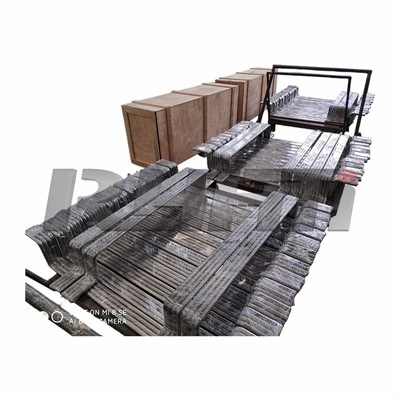
Stable Conductivity and Low Energy Consumption
The copper core maintains excellent conductivity, low contact resistance, and stable high-current transmission, saving 15%–30% more energy than pure titanium electrodes, resulting in lower long-term electricity costs.

Superior Corrosion Resistance and Doubled Lifespan
The outer TA1/TA2 pure titanium layer is resistant to strong acids, strong alkalis, seawater, and chloride corrosion, with a lifespan more than 10 times that of ordinary copper parts, reducing replacements and downtime.

High Strength and Resistant to Deformation
Composite strength ≥135MPa, tensile and shear strength 180–260MPa, resistant to bending and torsion, and will not bend or crack under long-term heavy loads.
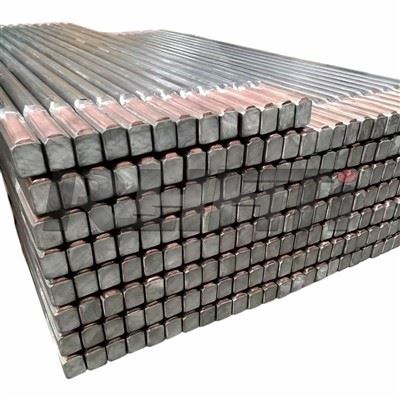
Lightweight and High Cost-Effectiveness
Lighter and lower cost than all-titanium parts; more durable and requires less maintenance than pure copper parts, resulting in a significant reduction in overall costs.
III. Mainstream Processes: Stable, Robust, and Uniform The industry mainstream adopts explosive bonding + hot rolling and hot extrusion + cold drawing to achieve a metallurgical bond between titanium and copper:
- High bonding rate and uniform interface
- No delamination during turning/milling
- High dimensional accuracy; customizable round bars, flat bars, plates, and irregularly shaped parts
IV. Application Scenarios: Applicable Everywhere
✅ Chlor-alkali/Electrolytic Chemicals: Anodes and cathodes, conductive busbars, electrode connecting rods
✅ PCB/Electroplating/Etching Copper Extraction: VCP line anodes, hangers, conductive beams
✅ Hydrometallurgy/Metal Purification: Electrolytic cell electrodes, seed plates, flow guides
✅ New Energy/Energy Storage: Electrolytic water hydrogen production electrodes, corrosion-resistant conductive components
✅ Marine/Corrosion Protection Engineering: Conductive components for seawater environments, heat exchanger components
V. Why are companies switching to titanium-clad copper? - Resistant to corrosion and leakage in highly corrosive environments
- Low loss and high efficiency under high current conditions
- Cost reduction, efficiency improvement, and minimal maintenance throughout the entire life cycle
- In line with green manufacturing and energy conservation trends
VI. In Conclusion
Material upgrades mean capacity upgrades.
Titanium-clad copper, with its unique structure of "internal conductivity and external corrosion resistance," has become a key basic material for high-end manufacturing, green chemicals, and new energy equipment.
From workshop electrodes to large electrolytic cells, it silently shoulders the responsibility of stability and efficiency, a silent hero on the industrial field.
Baoji Ruihenghua Titanium Metal Composite New Materials Co., Ltd. specializes in titanium-clad copper, stainless steel-clad copper, zirconium-clad copper, copper-clad steel, titanium-clad aluminum, titanium cathode plates, stainless steel cathode plates; and various rare metal rectangular and irregular seamless tubes. Welcome to inquire.