


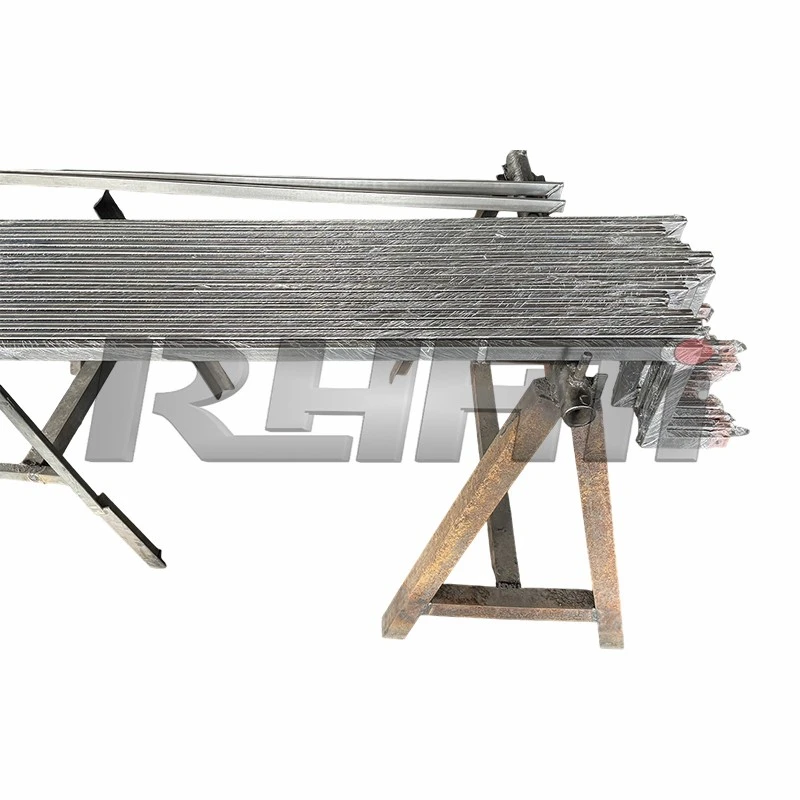

Baoji Ruihenghua Titanium Metal Composite New Materials Co., Ltd. is one of the leading manufacturers and suppliers of settling anode plate in China. If you're going to buy customized settling anode plate made in China, welcome to get more information from our factory. For price consultation, contact us.
Product Introduction
The submerged titanium anode plate is a fully immersed, submerged DSA insoluble electrode specifically developed for vertical electroplating tanks and hydrometallurgical electrowinning tanks. Unlike ordinary top-suspended anodes, the entire electrode plate completely sinks to the bottom of the tank during operation, forming a uniform and complete electric field from bottom to top, fundamentally solving the electroplating delamination defect of thinner top and thicker bottom on the workpiece. The substrate uses TA1 high-purity titanium plate conforming to ASTM B265 Gr1 standard, with a surface coating of iridium-tantalum precious metal catalytic coating specifically for PCB acid electroplating. The integrated perforated structure on the plate surface accelerates the convection and exchange of the plating solution at the bottom of the tank, significantly improving the deep plating capability of through-holes in high aspect ratio circuit boards. The self-weight submerged structure eliminates the need for a complex support frame inside the tank, simplifying the tank layout; there is no anode sludge precipitation during the production process, reducing the frequency of filter consumables and plating solution maintenance. It is widely used in vertical PCB electroplating production lines, non-ferrous metal electrowinning, and electrolytic copper foil post-processing electrolytic equipment.
Product Parameter
Implement International Standards System
● National standard for titanium anodes: GB/T 34632-2017 "Titanium Anodes Coated with Metal Oxide".
● International standard for titanium substrates: ASTM B265 Gr1 (TA1) high-purity titanium sheets.
● Electrochemical testing standard: GB/T 23614 Specification for accelerated anodic life and oxygen evolution potential testing.
● Environmental compliance: EU RoHS 2.0 compliant, lead-free and cadmium-free precious metal coating.
● Applicable plating solution systems: copper sulfate acidic copper plating solution, nickel sulfate electroplating solution, chloride wet electrowinning electrolyte (temperature 20–50℃).
Standard Materials And Structural Parameters
|
Parameter Classification |
Optional Specifications |
Detailed Description |
|
Anode substrate grade |
TA1 Gr1 High Purity Titanium Plate |
Titanium purity ≥99.6%, long-term immersion resistance to pitting corrosion at the bottom of the tank is superior to TA2. |
|
Titanium plate substrate thickness |
Thickened counterweight version (1.5mm / 2.0mm / 2.5mm / 3.0mm) |
For small-scale test tanks, use 1.5–2.0mm thicker tubing; for mass-production vertical electroplating lines, use 2.5–3.0mm thicker tubing with added weight and settling. |
|
Panel punching specifications |
Aperture φ5–φ10mm, opening ratio 30%–48% |
HDI thick plate electroplating uses a high open area ratio of 42%–48% to enhance the circulation of the plating solution at the bottom of the tank. |
|
precious metal coating system |
IrO₂-Ta₂O₅ Iridium-Tantalum Composite Coating |
Total coating thickness 9–13 μm, precious metal loading 9–13 g/m², long-life custom versions up to 22 g/m² |
|
Finished product size range |
Width 150–1500mm, Length 400–3500mm |
Adaptable to various domestic and imported vertical electroplating tank internal dimensions |
|
conductive terminal structure |
The upper part is a one-piece bent titanium conductive beam with an external insulating sheath. |
The bending section is 4–6 mm thick and sealed with high-purity argon arc welding to prevent plating solution from penetrating and corroding the conductive core. |
|
Optional structure style |
Single-layer perforated settling anode, double-layer composite mesh settling anode, and integrated anode with thickened bottom counterweight. |
Double-layer composite plating with high-current pulse vertical electroplating results in a more uniform electric field distribution. |
|
Surface pretreatment |
Titanium plate sandblasting roughening + acid pickling activation multi-layer sintered coating, significantly improving adhesion. |
Product Features and Applications
Product Advantages
The entire bottom of the tank is submerged and the electric field is fully covered, eliminating the difference in plating between the upper and lower parts of the workpiece: The entire electrode plate is submerged to the bottom of the tank, and the electric field extends from the bottom of the tank to the liquid surface. The difference in current density between the upper and lower parts of the workpiece is reduced by 75%, which perfectly solves the common industry problem of thin plating at the upper end and excessive plating at the lower end of vertical electroplating workpieces. It is suitable for the mass production of ultra-thin fine circuit boards and thick copper substrates.
The self-weight integrated counterweight design eliminates the need for additional support fixtures: the thickened titanium plate at the bottom has its own counterweight, and it automatically settles and fits the bottom of the tank during the entire process of power-on operation, eliminating the need for accessories such as tank supports and fixing buckles, reducing the cost of modifying electroplating tank equipment, and making higher utilization of tank space.
Specialized iridium-tantalum low-loss coating significantly reduces electroplating agent replacement cycles: The coating ratio is optimized for vertical long-term continuous electroplating, resulting in a lower oxygen evolution catalytic potential and a reduction of more than 30% in the decomposition loss of brighteners and leveling agents, significantly reducing monthly agent procurement and replenishment costs.
Zero anode sludge simplifies plating solution maintenance: The anode itself does not dissolve or consume, and there will be no copper slag or metal impurity precipitation, which extends the replacement cycle of filter element and activated carbon, reduces the frequency of downtime maintenance, eliminates particle and pinhole plating defects on the board surface, and improves PCB yield.
TA1 high-purity titanium thickened substrate, resistant to long-term scouring and corrosion at the bottom of the tank: using Gr1 titanium material with lower impurity content, the passivation film is stable under the continuous scouring of high-speed circulating plating solution at the bottom of the tank, and it is not easy to produce local pitting corrosion and perforation; integrated bent and sealed conductive structure to prevent electrolyte from seeping into the weld and corroding the conductive end.
Titanium substrates are recyclable, recoated, and repaintable, offering better long-term cost-effectiveness: After the precious metal coating reaches the end of its lifespan, the titanium substrate remains intact and corrosion-free, allowing for recycling by removing the old coating and recoating with a new iridium-tantalum catalyst layer. This reduces long-term procurement costs by 42% compared to disposable anodes.
Application Areas
PCB manufacturing: fully automated vertical continuous copper plating production line, HDI thick copper substrate electroplating tank, pulse reverse vertical electroplating equipment.
Hydrometallurgical industry: Bottom-sinking anode system for copper, nickel, cobalt, and zinc electrolytic cells.
Electrolytic copper foil production: foil making machine, copper foil surface treatment, vertical electrolytic cell, settling titanium anode.
Hardware surface treatment: Large-scale vertical automatic rack plating production line for copper and nickel plating of precipitated anode plates.
Environmental water treatment: heavy metal recovery, industrial wastewater electrolytic oxidation vertical large-scale electrolytic cell.
Laboratory electrochemical equipment: pilot-scale vertical electrolytic reaction cell, electrochemical sample testing sedimentation anode.
Production Details
Coating Control
Each layer is sintered at a constant temperature in sections after spraying, and the precious metal load is recorded and traced for each board. The coating thickness error is ±0.5μm.
01
Bending and welding quality control
There are no micro-cracks at the bending points of the conductive terminals, and the counterweight welds have zero porosity and zero gaps, thus isolating the plating solution penetration channels.
02
Flatness standard
The warpage of the finished settled anode plate is ≤0.7mm/m, ensuring that the plate surface is flat and fits the bottom of the tank after settlement.
03
Corrosion resistance test
The coating was subjected to high-speed liquid circulation and flushing at the bottom of the tank for 72 hours. No peeling or exposed titanium corrosion defects were observed.
04
Product Supporting Documents
Authoritative International Qualification Certificates
TA1 titanium sheet original material certificate, MMO coating precious metal load, anodized accelerated life test report, and original material certificate of EN 10204 3.1 for each batch.
ISO 9001 Quality Management System Certification, ISO 14001 Environmental Management System Certification.
SGS third-party sampling test report on chemical composition, coating adhesion, and electrochemical performance.
RoHS 2.0 environmental testing report, meeting the environmental control standards for high-end electronic PCBs and new energy hydrometallurgy.
thoughtful service
Packaging Standards (For Export By Sea)
The entire settled titanium anode plate is wrapped with anti-static PE protective film on both sides, and the plate surface is fully covered with pearl cotton for isolation to prevent the coating from being bumped and scratched.
Multiple finished pieces are layered and fixed in a fumigated solid wood export crate, with an internal hardwood frame for support, preventing warping, bending and deformation during transportation.
The wooden crates are clearly marked with product specifications, quantity, moisture-proof, and handle with care labels, and are suitable for domestic land transportation, port sea transportation, China-Europe freight trains, and air express logistics.
Professional Consultation Q&A
Q1: Compared to top-suspended anodes, what are the core advantages of settled anode plates in electroplating?
A1: Traditionally, the electric field of the hanging anode is concentrated in the upper half of the tank, resulting in weak current at the lower end of the workpiece and a thinner coating. With the sinking anode, the electric field is completely submerged in the bottom of the tank, and the electric field is evenly distributed from bottom to top. This significantly reduces the thickness difference of the coating between the upper and lower parts of the workpiece. At the same time, the perforated structure at the bottom of the tank promotes the circulation of the chemical solution, improving the deep plating capability in the holes of high aspect ratio PCB boards by 40% and significantly reducing the scrap rate.
Q2: Will electrolyte leakage and corrosion occur at the weld of the integrated bent conductive terminal of the settling anode?
A2: No. Our bent terminals and titanium mainboards are welded using high-purity argon gas with full penetration sealing. All finished products undergo weld penetration testing. The bent sections are protected by an insulating sleeve, with only the upper end having a pre-exposed conductive wiring area. There are no exposed weld seams in the immersion area, completely preventing plating solution from seeping into and corroding the conductive structure.
Q3: If the coating of a settled anode fails after a period of use, can the titanium plate still be reused?
A3: Absolutely. The thickened titanium substrate of the settled anode exhibits excellent corrosion resistance. Even after the coating is exhausted, the titanium plate shows no pitting damage and can be sent back to the factory to remove the failed coating, re-blast and reactivate it, and then spray a new iridium-tantalum precious metal catalyst layer. After repair, the electrochemical performance is consistent with that of a brand new anode, with only the coating processing cost incurred, significantly reducing long-term procurement investment.
Latest company news
A dedicated intelligent production line for PCB water treatment anodes has officially commenced operation, significantly upgrading the company's capabilities in delivering electronic wastewater treatment solutions.
Leveraging the advantages of Baoji's "China Titanium Valley" raw material and processing industrial cluster, our company has completed the expansion and implementation of a fully intelligent production line for PCB-specific submerged anodes. This expansion includes the addition of fully automated equipment for titanium substrate sandblasting and activation, segmented sintering of precious metal coatings, and integrated online electrochemical monitoring. Addressing the needs of PCB industry processes such as etching wastewater recovery, electroplating wastewater COD degradation, and ammonia nitrogen removal, we have optimized ruthenium-iridium/iridium-tantalum dual-series coating formulations, resolving the pain points of traditional anodes such as low electrolysis efficiency, easy coating peeling, and short service life. We can mass-produce customized mesh, board, and tubular fully submerged submerged titanium anodes, shortening the delivery cycle of non-standard customized orders by 30%. We provide one-stop wastewater electrolysis treatment anode products for major PCB industrial parks and circuit board manufacturers across China.
The iterative development of PCB underwater anodic electrochemical coating technology has enabled low-loss, long-lasting anodes to replace imports.
The company's R&D team focuses on continuous technological breakthroughs in electronic manufacturing wastewater treatment. Specifically addressing the highly corrosive conditions of PCB high-chlorine and acidic etching wastewater, they have optimized the TA1 high-purity titanium substrate pretreatment process and the multi-layer precious metal thermal sintering process. The new generation of PCB-specific water-based anodes possesses three core advantages: low chlorine evolution potential, high pollutant degradation efficiency, and strong coating adhesion. At the same current density, reagent consumption is reduced by 28%, and the continuous stable service life is increased by 40%. Its electrochemical performance is comparable to imported products, making it a complete replacement for overseas brand water-based anodes. This significantly reduces the maintenance and spare parts procurement costs of environmental protection equipment in PCB factories, contributing to the localization and upgrading of domestic PCB environmental protection equipment.
With a well-established end-to-end standardized quality control system and a comprehensive global logistics service network, the delivery guarantee for PCB customers both domestically and internationally is strengthened.
The company has upgraded its quality inspection standards for PCB water-soluble anodes. All fully submersible titanium anodes for water treatment simultaneously comply with both the national standard GB/T 34632 and the international standard ASTM. Each anode undergoes a full set of tests for accelerated life, chlorine evolution efficiency, and coating adhesion. Each batch of products comes with an EN 10204 3.1 material testing certificate and an SGS environmental testing report. Leveraging its own import and export logistics channels, the company offers multiple shipping options including sea freight, air freight, and China-Europe freight train, along with a 7-day free replacement guarantee for non-human-caused quality issues. Products are currently supplied in bulk to major PCB production bases in South and East China, and are also exported to electronics manufacturing industrial parks in Southeast Asia and Europe. With its core advantages of corrosion resistance, high electrolysis efficiency, and recyclability, the company has gained long-term and stable cooperation and recognition from global PCB manufacturers, establishing itself as a benchmark domestic manufacturer of water-soluble anodes for PCB wastewater treatment.
Hot Tags: settling anode plate, China settling anode plate manufacturers, suppliers, factory, pcb water anode, Settling Anode Plate, Titanium Anode For PCB Horizontal Plating, Titanium Clad Copper Conductive Beam, Titanium Clad Copper Torsion Bar